Author: Kaleigh Dugan

  • How Reality TV Has Shaped Me

    There’s a definitive kind of peace in turning your brain off and watching someone else’s life absolutely spiral into chaos. 

    That is what I used to think reality TV was: background noise. Distraction. Scripted entertainment for the sake of it. A satire of actual reality where eyelashes were long, tempers were short, and everyone broke down in confessionals under suspiciously good lighting.

    But lately, I’ve started to realize just how deeply it’s shaped me. Not just in the way I quote Snooki and JWoww when I’m trying to be funny, but in the way I have begun to understand performance, character, and the messy act of self-discovery. That is how I realized reality TV didn’t just captivate me. It formed me.

    Not in the “I need to get Juviderm and fake cry on cue” kind of way (although Botched has certainly taught me what not to do to my face). But in the silent, hushed way that TV tends to slip into your brain. Reality TV trained me in reinventing yourself mid-season. It taught me that a storyline can change with the proper editing… or the proper outfit. That you can be both deeply flawed and deeply adored.

    It made me curious about the line between who we are and who we perform as. Whether we’re curating our Instagram feeds or narrating our own lives in a voiceover, like we’re on Love Island, we have all developed into producers of our own reality. 

    And maybe that approach isn’t a bad thing. I used to watch for the drama. But now, I watch for the humanity.

    Reality TV, in its basic, primitive glory, taught me that identity is fluid. That people will negate themselves, get canceled, repair themselves, come back stronger, and still make the same mistakes all over again. And I see myself in that part. 

    We all have our own deleted scenes and best moments. Our “I’m not proud of this but it made me who I am” moments.

    Reality TV didn’t make me shallow – it made me observant. Reflective. Intrigued by how people choose to be seen – and how editing (literal and metaphorical) shapes the story.

    Because at the end of the day, I don’t just love the show. I love the humanity in the mess. If there is anything I have learned from watching strangers fall in love on the third episode or cry over a poorly executed charcuterie board, it is this: We are all just trying to be seen.

    To be appreciated. 

    To find the confessionals where we can say, “This is who I am, and here is why that matters.”

  • Getting to Know Yourself

    There was a time when I thought “knowing yourself” was a destination.

    Like one day I would wake up, glance in the mirror, and just get it. All versions of me: the confident one, the quiet one, the one who overthinks everything for a little too long – would perfectly align with constellations, and form an impeccable picture. One immaculate version: neat, elegant, chic. 

    But it turns out, getting to know yourself is not an arrival or a trend – it is a practice. A chaotic, beautiful, and occasionally uncomfortable unfolding. And no one really teaches us how to do it. We know how to organize a resume, how to formulate an Instagram theme, how to answer “tell me about yourself” with a sleek list of interests and humble brags. But to truly comprehend what makes us us takes more than a personality quiz or an aesthetically pleasing Pinterest board.

    It takes sitting in silence with the questions that don’t have easy answers.

    The Version Without the Filters

    When you uncover the identities you perform – the teacher, the daughter, the “cool girl” on social media – what’s left?

    Are you still you when no one is paying attention? When you’re not trying to be productive or ideal or impressive?

    Getting to know yourself means meeting the parts of you that aren’t always presentable. The ones that feel too delicate, too unpolished, too much. And then deciding they are worth knowing, too.

    Pop Culture as a Mirror

    In a culture that rewards aesthetic over quality, getting to know yourself can feel like a rebellion. It means saying “no” to what looks pretty on paper if it doesn’t feel good in your soul. It means unlearning the need to be likable. It means not having to be a reflector of “Instagram face.” It means being okay with not always having an “identity” to brand.

    Some days, the most authentic version of me is the one in her pajamas at 3pm, writing personal essays that no one reads in her bedroom. Other days, she’s in red lipstick sharing big opinions about politics. Both are valid. Both are me.

    Here’s What I Know (So Far)

    Getting to know yourself does not mean locking yourself into one definition. It means gathering little truths – the way you light up after a good conversation, the oddly specific way you need your coffee in the morning, the muted ache you feel when the summer sunset reminds you of swimming at your aunt’s house as a kid.

    So, no. I have not “figured myself out” yet. But I am beginning to delight in listening more closely. And I believe that this is where it begins.

  • The Best Student One Liners (That Deserve Extra Credit)

    Let’s be absolutely real here: my students are outright comedians in my classroom. Whether they are delivering a witty comeback, a wildly dramatic complaint, or just educating me on the pop culture lingo that I am way too old to understand at 22, these one-liners should reside in a Hall of Fame (or at least a group chat).

    Here are some of the best student one-liners I have actually heard in my classroom (yes, these are real…)

    • “Is this gonna be on the test?” — a true classic, asked during every new lesson. Followed by:
    • “We never learned this!” — Yes, we did, besties!
    • “They say good things take time, that’s why all my assignments are late.” — A flawless yearbook quote.
    • “Why would I try any harder if a 70 is passing.” — As Chappell Roan said, Good Luck, Babe.
    • “I’m really asleep” — Said angrily after being accused of fake sleeping.
    • “If you had a Tiktok, you look like you wouldn’t repost anything.” — I do, in fact, have a Tiktok. And I do, in fact, repost just about everything.
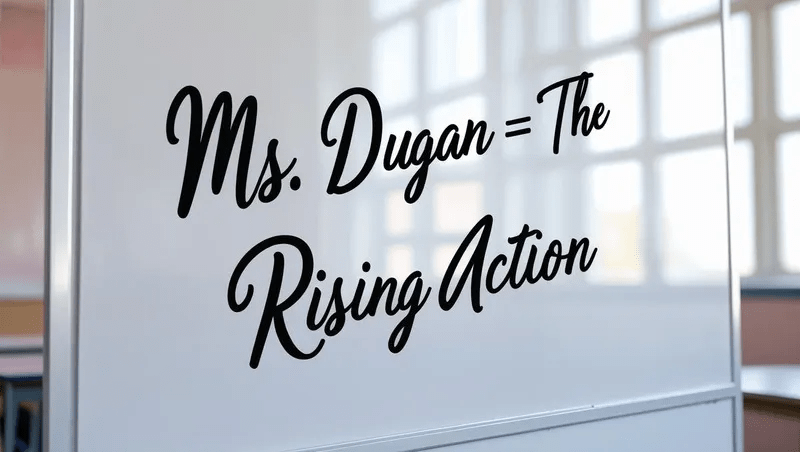
    • And finally: “I’m gonna start calling Ms. Dugan the Rising Action because she’s always tryna start a conflict.” Bravo, at least we’re learning literary terms.

    There’s something so genius about the way students turn stress, confusion, and chaos into punchlines.

    Whether you are grading papers at 11:59pm or submitting them, one thing is for sure: humor may just be the only thing keeping us all going.

    Got any memorable student one-liners? Comment them below — we all need a good laugh this summer!

  • What I Didn’t Learn in College

    I spent four years studying everything except how to live.

    College taught me how to write a 10-page paper on why we should talk about Fight Club. How to navigate group projects with people who never showed up. How to pull off an all-nighter and still manage to make it to my three hour, 8am class with a coffee and full face of makeup. 

    But here is what I didn’t learn: 

    I didn’t learn that friendships take effort, and that sometimes, no matter how much effort you put in, people still drift.

    I didn’t learn how to recover from the sting of mean girls. 

    I didn’t learn what a normal relationship actually looks like. 

    Or how to stop blushing over a boy who only texts after 9pm.

    Or that a “pink” flag is still a shade of red.

    I didn’t learn how to say “no” without apologizing or explaining myself.

    I didn’t learn how to slow down when every part of me was prepared to sprint.

    I didn’t learn how to drink without feeling guilt or to say “I’m done” without sounding boring.

    I didn’t learn how to have fun at a party while also being myself.

    Here’s the truth: college is fun. Most of my favorite memories are of campus events, dancing at the bar, late night drives to Wawa, and various inside jokes that still make me giggle. 

    College gave me structure: a campus map, a plan, a GPA to aim for. It gave me ambition and grades to measure my success. It gave me deadlines to meet. It gave me a sense of direction. It made me aspire to be someone. It transformed me into someone new. At the time, that felt like everything I needed.

    But it didn’t teach me how to go easy on myself because most parts of life come without a syllabus.

    There was no class on how to be confident after being criticized by sorority girls.

    There are no office hours for your quarter-life crisis.

    There is no participation grade for showing up to work.

    You don’t get extra credit for learning how to be gentle with yourself.

    The most valuable lessons I learned happened outside of the classroom. They happened in the hours where I had to figure it out alone – in my messy dorm next to the windowsill where my roommate left an accumulation of half-drank iced coffees and in the hidden booth in the library where I finally let myself cry. Those are the lessons that stick. 

    I am not saying that college was a waste. It transformed me. It gave me a voice. It filled my bookshelf and my brain and my camera roll. It did not teach me how to be okay when life isn’t perfectly curated or mapped out. That came after graduation. It is still coming to me, in waves. So I will tell you this now, and I will say it like your big sister would: 

    You do not need to have it all figured out.

    You are going to outgrow people, and that is perfectly okay.

    You can be brilliant but still foolish enough to get your heart broken. 

    You can mess things up and still be deserving of good things.

    Whatever happens, you are going to be okay – even if it doesn’t feel that way at the moment.

    And when you are not sure of who you are, start with who you don’t want to be.

    The rest will come.

    Support the Blog 🙂

    https://buy.stripe.com/14A3cw3eF99Zfi5fu1eQM00
  • The Soft Process of Becoming Me

    If I am being honest, most of my life has been wasted by me trying to arrive somewhere. A version of myself that finally feels transformed. Renewed. Rejuvenated. As if there is a finish line where everything finally clicks into place and I get to say: There. I’ve made it.

    But recently, I have started to realize that the version of me I am waiting for may not actually exist. Not because I’m inadequate, but because “there” was never really the point.

    Becoming isn’t an arrival. It is a journey – and a pretty imperfect one.

    There are days when I feel complete, empowered, and self-assured. And then there are the days where I still feel behind, hesitant, and afraid of all the versions of myself I am trying to balance: the professional me, the creative me, the friend, the daughter, the visionary, the realist. It’s a spinning cast of identities that sometimes fits like my favorite pair of jeans, and other times feels like I am trying on clothes that don’t belong to me.

    I used to believe that growing was about getting stronger, more creative, more organized. But more often, I’m discovering that real growth is softer than that. It’s not about verifying myself – it’s about finding peace with the parts of me I don’t fully understand yet.

    It is learning to sit in the in-between crevices. The mornings when my coffee tastes abnormally good. The silent victories that no one sees. The hard conversations where I finally communicate honestly. The tiny act of giving myself grace when I fall short.

    Becoming me means letting go of the pressure to constantly transform into something newer, better, shinier. It means letting myself exist – complicated and exposed. 

    Maybe the real becoming is about uncovering space for softness.

    Softness in my schedule. 

    Softness in my intentions. 

    The truth is, I don’t know exactly who I am becoming. But for the first time, I am okay with that.

    Becoming isn’t an objective to complete. It’s simply the quiet, continuing permission to keep growing.

  • Becoming ‘That Girl’ Online Versus Becoming Myself in Real Life

    I know how the algorithm wants me to live. 

    Wake up early, fall asleep with lemon water waiting on my nightstand. Keep an organized journal in perfect handwriting. Sunrise spilling over an immaculately made bed. A matcha latte with perfectly frothed oat milk. Pilates, skincare, soft lighting, neutral tones, color palettes. Becoming that girl.

    Online, that girl feels attainable. You just need the right filters, the right angles, and the right aesthetic props at hand. The digital version of myself can look composed, candid, balanced – even if the photo took 15 tries and I shoved a pile of unfolded clothes out of the frame.

    But real life isn’t nearly as polished.

    Like I wrote in my piece about romanticizing my skincare routine, I’m learning that true self-care isn’t about creating the perfect version of myself – it’s about learning to sit with who I really am.

    In real life, I am still learning how to find myself – and that version is far less attractive.

    Sometimes, becoming myself means sleeping through the alarm sometimes. It means beginning the day with coffee before gratitude journaling because as a teacher I don’t have much time and I can’t think straight without caffeine. It is being ambitious despite feeling anxious, purposeful but also overwhelmed, calculated but also unorganized. It means admitting that balance is not always possible – that sometimes I don’t meditate, and sometimes my skincare routine is just splashing water on my face before bed.

    Online, self love can feel like a performance. Offline, it feels like a process.

    Becoming that girl online is about crafting perfection. Becoming myself in real life is about learning to sit with the imperfections.

    I have spent a lot of time chasing the Kaleigh that looks decent on camera. But recently, I have been trying to find the Kaleigh who feels secure when no one is watching. The Kaleigh who makes time for her friends, even if she doesn’t have a lot of them. The Kaleigh who prioritizes joy, and lets herself rest without guilt. The Kaleigh who knows that not every season needs to be a glow-up.

    I am learning that the most authentic kind of self-improvement doesn’t have to come with a 24-carat aesthetic. Sometimes it’s messy. Sometimes it’s honest but inconsistent. Sometimes it’s plainly deciding to be a little bit more transparent with myself than I was yesterday.

    Because becoming that girl may get me likes. But becoming myself is what’s bringing me peace.

  • Three Films that Saw Me Before I Saw Myself

    Every once in a while, a movie scene sneaks up on you. It slips past your expectations, bypasses your delicately constructed emotional guardrails, and elegantly lands somewhere deep inside. For me, these scenes came unexpectedly. I didn’t realize in the moment how much these scenes would stick with me.

    Sometimes it is a grandiose speech or a dramatic turn of events. Other times it is the climax of the film. Occasionally it is the quiet moments, the in-between scenes that most viewers forget about. Either way, as I pressed pause on my own life and hit play on my screen, I felt as though the directors were holding up a mirror and saying, “Hey, is this you?”

    I never expected films like Barbie, Lady Bird, or Promising Young Woman to hit me the way that they did. But somehow, each of them dealt me a tiny piece of myself that I never realized I was missing.

    Barbie: Gloria’s Monologue

    When America Ferrera’s character delivered that monologue in Barbie, I felt deeply seen. It was the way she essentially laid it all out, how exhausting it actually is to be a woman who’s supposed to be literally everything, all at once, without ever letting it look difficult. Pretty but not too pretty. Ambitious but not too intimidating. Intelligent but humble. A leader but likable.

    The first time I watched Barbie, I sat there thinking: Oh. For years, I have carried this quiet pressure to achieve the perfect balance. This speech has reminded me that to struggle is not a flaw, it is part of existing in a world that does not often make sense. Hearing a maternal character remind me that I can let it all go felt like a new kind of freedom.

    Lady Bird: The Car Ride

    And then there is Lady Bird. There is a scene towards the end of the film where Lady Bird (whose real name is Christine) is driving through her hometown of Sacramento. In this moment, she reflects on Sacramento, a place she once could not wait to get away from. Suddenly, it feels like the mundane has become beautiful. The streets she has driven countless times hold a softness she had never noticed before.

    This scene reminds me of how often I have overlooked the small, ordinary pieces of my own life. My home, my family’s dynamics, my Sunday routines – I always feel like my life needs to feel bigger. I have been so preoccupied by wanting to be perceived as extraordinary enough that I have lost touch with how much the unremarkable moments have actually shaped me.

    Promising Young Woman: The Ending

    Finally, Promising Young Woman. Without any spoilers, the ending of the film was brutal, complicated, and despite all else, empowering. Regardless of how vigilant I believed I was, I never could have seen the plot twists coming. Without giving too much away: Cassie’s project does not conclude in the sort of immaculate triumph that Hollywood loves to give us. There are flaws, but there is also a ruthless sense of justice. Cassie took control in a world that took everything away from her.

    What struck me the most was the way that Promising Young Woman forces you to sit with discomfort. The ending doesn’t fool you into buying that everything turns out okay, because oftentimes things aren’t okay. It taught me that feeling empowered does not always mean smiling through the pain or searching for the bright side. Sometimes it’s about staring directly at the ugly and refusing to look the other way. There is a power in telling the truth, even when it damages you. Especially when it damages you.

    These scenes did not hit me all at once, but together, they have quietly rewired the way that I see myself – especially as a young woman dealing with so much uncertainty. I am trying to be a bit more compassionate with the messy parts. To be merciful with my feelings, even when they are complicated. To welcome the dull moments that I used to overlook. And to remain courageous in the face of all things that are unfair. 

    Movies don’t just entertain us. They hand us pieces of ourselves that we did not know we were looking for.

  • Hello World!

    Welcome to WordPress! This is your first post. Edit or delete it to take the first step in your blogging journey.

  • Why Writing Instagram Captions Feels Like Therapy

    There’s something oddly cathartic about crafting the perfect Instagram caption. I am not talking about the cheeky “in my main character era” kind (although I love a good T.S. innuendo). I mean the kind where you sit with an emotion, wrestle it into a few words, and manage to make it sparkle.

    This is not just wordplay, it is a digital diary.

    When I scroll through my camera roll, I am not just looking for my finest angle. I’m searching for a moment that meant something, even if the memory was as short as the camera flash. The gelato that led me to discover a cherry allergy. The bartender I swore looked like Jason Kelce. The photo where my face is asymmetrical and my smile is off-center, but unmistakably real. And when I sit down trying to caption those photos, my intention is more than racking up likes — I’m trying to convey my feelings in a sentence or two.

    A picture is worth a thousand words. But none of my followers are going to read all that. Maybe it’s the writer in me. Or maybe it’s the part of me that wants to be seen. Instagram captions let us share just enough. We can be witty, honest, arrogant, sentimental — sometimes all at once. It’s a space to reclaim control over our stories, in a feed that is often too curated by an algorithm to be anything but real.

    There is also a freedom in knowing it’s not that serious…and yet, sometimes it is. A caption can be a subtle confession delivered through lowercase letters. A double entendre that landed when you felt like you weren’t funny anymore. A quote that you needed to read, even if you had to write it yourself first.

    So yes, caption writing is sometimes a catharsis. It is the digital version of your diary hung in a gallery with your friends, family, and fans. And while I won’t downplay actual therapy for a Notes app draft, I will leave you with this: when the words finally land, and your post goes public, it does feel like a little exhale.

    And that has to count for something.